
Choosing a haircut is often less about what is fashionable and more about what you can live with. If you are searching for women’s hairdressing in Exmouth because your current style feels like hard work, you are not alone. The right haircut should suit your hair texture, the way it grows, and how much time you actually have in the morning. It should also look good on a normal day, not just on the day it is blow-dried in the salon.
This guide walks you through how to choose a haircut that fits your lifestyle, what to say in your consultation, and how to avoid the common mismatch between what you ask for and what you end up maintaining at home.
Start with how you want your hair to feel day to day
Before you think about length or layers, think about what you want your hair to do on a Monday morning. Do you want it off your face. Do you want it to air-dry well. Do you like a style that looks neat with minimal effort, or do you enjoy styling and want a cut that supports that.
A good stylist will ask these questions, but it helps if you have an answer ready. Try these prompts:
- I want it to look tidy even when I have not styled it
- I am happy to use a dryer but I do not want to spend ages
- I wear it tied up most days and I want it to sit better when I do
- I want more movement, but I do not want it to go fluffy
- I want it to grow out well because I cannot come in too often
These are real-life goals. They lead to better haircuts than showing a photo without context.
What a proper consultation should cover
The consultation is where most good haircuts are won. A consultation is not just “a trim or two inches off”. It is a short planning session, so your stylist understands what you need and how your hair behaves.
A strong consultation usually covers:
Hair texture and density
Fine hair often needs a different approach to layering than thick hair. Fine hair can lose shape quickly if the ends are thinned too much. Thick hair can feel heavy if there is not enough internal removal and movement.
Growth patterns and cowlicks
Where your hair naturally parts, where it sticks out, and how it moves around the crown matters. A cut that ignores this can look right for one day, then become awkward.
Face shape and features
This is not about rules. It is about balance. The right length around your face can soften angles, open up your cheekbones, or make a fringe feel less severe.
Your routine
How often you wash it, whether you dry it properly, and whether you use heat styling changes what will work.
Bring photos if you like, but it helps to bring two kinds. One photo of the look you love, and one photo of hair you do not want. That second photo can be just as useful.
Women’s hairdressing in Exmouth and the lifestyle test
A helpful way to choose a haircut is to run it through a simple lifestyle test. Ask yourself three questions:
- How often will I style it properly
If the answer is “rarely”, choose a cut that air-dries well and does not rely on a perfect blow-dry to sit nicely. - How often can I realistically come back
Some shapes need regular maintenance to keep their edge. Others grow out softly and still look good later. - What annoys me most about my hair now
Is it bulk. Is it flatness. Is it the front falling into your eyes. Is it the ends flicking out. A good cut should solve a problem, not add a new one.
When you explain this clearly, your stylist can recommend a shape that fits you, rather than forcing you into a style you will not maintain.
Low maintenance does not mean boring
Many people ask for low maintenance haircuts, then worry that they will end up with something plain. Low maintenance is not about dull hair. It is about smart structure.
Examples of low maintenance choices that still look polished:
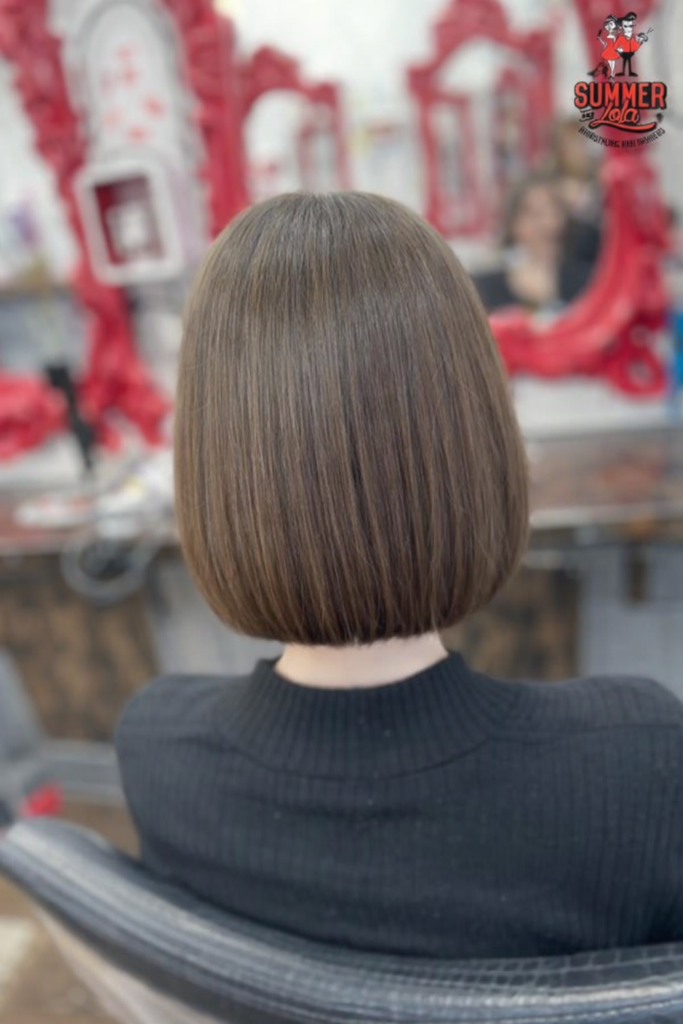
A blunt bob with soft internal shaping
This can look clean and modern, and if it is cut well it can sit nicely even when it is not styled perfectly.
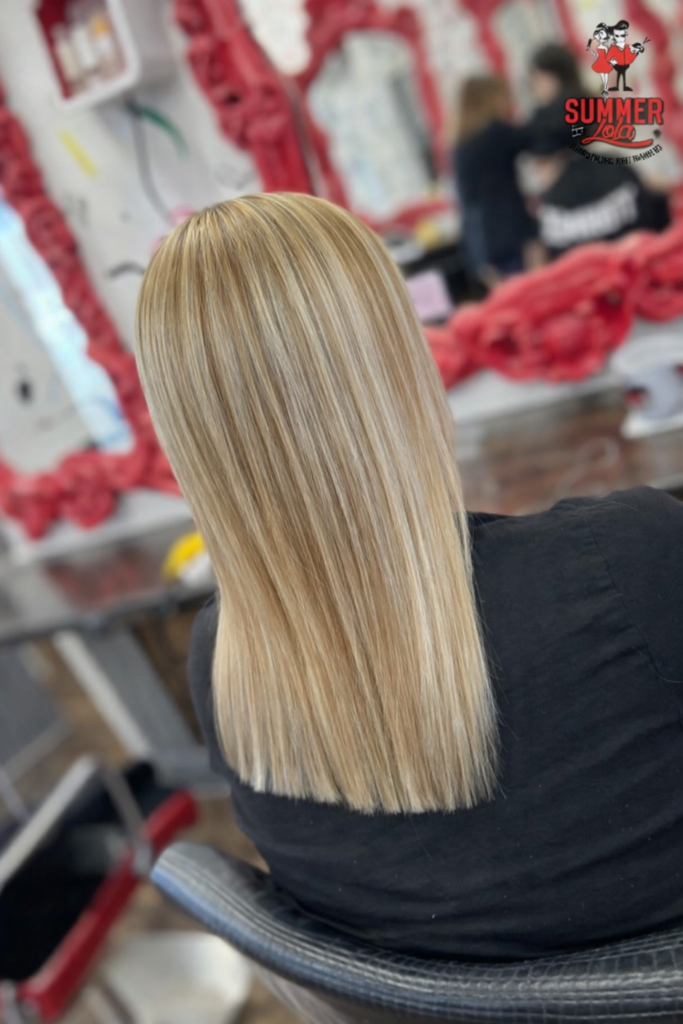
A long layered cut that keeps weight in the ends
This gives movement without making the ends feel thin and wispy. It also tends to grow out well.
A collarbone length cut
This is one of the most wearable lengths. It is long enough to tie back and short enough to feel lighter.
A fringe that suits your routine
A fringe can be easy if you are happy to dry it quickly. If you never use a dryer, a heavy straight fringe may feel like constant effort. Softer, longer fringe options can be a better fit.
If your goal is easy hair, say that clearly. Your stylist can keep the shape supportive so it behaves well between appointments.
How to choose a haircut based on your hair texture
Hair texture is one of the biggest factors in whether a haircut feels easy or hard.
If your hair is fine
Ask for shape that keeps the ends looking full. Avoid too much thinning. If you want movement, small internal layers can help without making the ends look sparse.
If your hair is thick
You may need internal removal so it does not feel heavy and wide. The aim is to reduce bulk while keeping a strong outline so it still looks healthy.
If your hair is wavy
The cut should respect your wave pattern. Cutting the wrong way can create triangle shape or frizz. A stylist who works with waves will think about where the wave starts and how it sits when dry.
If your hair is curly
Ask for a consultation focused on curl behaviour. Curly hair shrinks when dry. It needs thoughtful shaping so it sits evenly and does not feel top heavy.
If you are unsure what category you are in, tell your stylist how your hair behaves when you do nothing to it. That is often the most useful information.
What to ask for if you want a change but feel nervous
Not everyone wants a big restyle. Sometimes you just want to feel different without regretting it.
Try asking for:
- A shape change that still allows me to tie it up
- More movement around my face without losing too much length
- Something that looks fresher but still feels like me
- A change that will grow out well if I do not love it straight away
A good stylist will talk you through what will change, what will stay the same, and how it will look after a few weeks. That is often what makes people feel confident about moving forward.
Keeping your haircut looking good between visits
A haircut that fits your lifestyle should not need constant fixing, but you can help it along.
Simple habits that make a difference:
Get clear on your parting
If you change your parting daily, your hair may never settle. If you keep a consistent parting, your cut tends to behave more predictably.
Use the right brush for your hair type
Fine hair often benefits from a lighter brush and gentle tension. Thick hair can handle more.
Do not overdo product
A small amount used well tends to beat a handful used out of frustration.
If you colour your hair, plan your haircut around it
Sometimes a fresh cut makes colour look better. Sometimes you want the colour first so the shape can be finished to suit the new tone.
When to book your next appointment
Some people like a very sharp shape and prefer regular trims. Others want a haircut that grows out softly. There is no right answer, but it helps to plan.
As a general guide:
- Shorter and more structured cuts often feel better with more regular maintenance
- Medium and longer styles can often go longer between visits if the shape is cut to grow out well
- If you have a fringe, you may want a quick tidy between full appointments
Ask your stylist what they recommend for your specific cut. It should be based on how your hair grows and how you want it to look, not a standard schedule.
Booking women’s hairdressing in Exmouth at Summer and Lola
The easiest way to get a haircut that fits your lifestyle is to book with a stylist who listens properly, explains the plan clearly, and cuts hair to suit how it behaves in real life.
If you are ready to book women’s hairdressing in Exmouth, book your appointment at Summer & Lola. If you would prefer to speak to the team first, call 01395 275 868.
FAQs
How do I explain what I want if I do not know haircut names
Describe how you want it to feel and behave. Tell your stylist what you struggle with and what you want to be easier. Photos help, but your routine matters just as much.
What if I want a low maintenance haircut but still want it to look styled
Low maintenance is about structure. A good cut can look polished with minimal effort if it is shaped for your hair texture and growth patterns.
How do I know if a fringe will suit me
A fringe can suit most people, but it needs to suit your routine. If you are happy to dry it quickly, you have more options. If you prefer air-drying, ask for softer fringe shapes that sit better naturally.
Should I get my hair coloured before or after my haircut
It depends on what you are doing. Many people do colour first, then finish with a cut to refine the shape. Your stylist can advise what makes sense for your plan.
How often should I have my hair cut
This depends on your style and how sharp you like it. Your stylist can recommend a schedule based on your cut and how your hair grows.
What if I have had a bad haircut before and feel nervous
Tell your stylist early. A good consultation will cover what happened, what you want to avoid, and what can realistically be improved now and over time.
Conclusion
A great haircut is not just a look, it is a routine you can actually keep up with. When you start with lifestyle, texture and honest maintenance expectations, you are far more likely to leave with hair that feels easy and looks good between visits. If your current style feels like a battle, a proper consultation and a well-planned cut can change that.
